What a November promotion has to sell to pay back
Published 22 Oct 2026
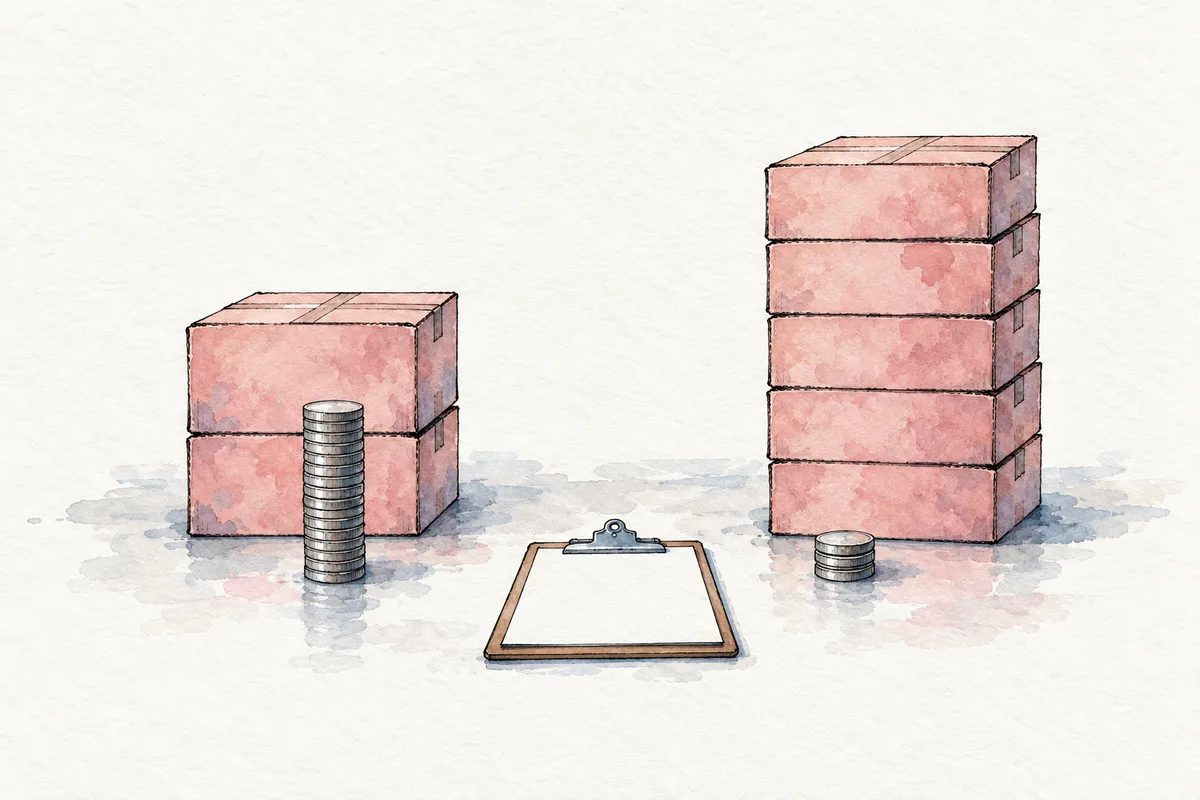
A promotion can sell more units and still leave you with less money. Before you sign the retailer’s form, price it against not running it. Write down what the product would sell in those weeks without the promotion, what it will sell with it, and what you pay the retailer per unit. Those give you its break-even in units, and a yes or a no with the number behind it.
Why price it now?
Black Friday is on 27 November this year, as Superdrug’s Black Friday page confirms. NIQ’s global beauty preview of 17 September 2026 opens:
"Black Friday is no longer a single shopping day. It has become a season, shaping when, where, and how consumers purchase beauty products."
Its next sentence begins "As promotions start earlier". That view covers beauty worldwide, and it does not tell you what your product will sell.
Can selling more leave you with less?
Kevin Herbert, now CEO of Upgrad’d Laboratories, recalled his business’s early days on Amazon in the UK, in a Pretty Equity interview with Melory Johnson, published on 27 July 2026:
"We were number one and number two in our category on Amazon, selling salicylic acid, and we were just burning through inventory and not really making any money."
He named the costs: "the listing fees, the sponsored ads, the money you have to put behind the brand to push it." That was a sales channel. A promotion form asks the same question. After what you pay to sell each unit, what is left?
I found no UK founder saying in public, in 2025 or 2026, whether a retailer promotion paid back. So the sum further down is made up.
What does the retailer ask the brand to pay?
Each retailer sets this in its own agreement, and I found no public rate card.
Boots’ supplier portal terms cover "promotional funding arrangements between Boots and Supplier". Its supplier account form labels supplier funding "Immediate (Standard)". Its payment report filed on 30 September 2026 puts payment for goods for resale in the weekly run after the 75th day after month end. The funding and the stock can carry different dates, and your agreement sets the real ones.
Holland & Barrett’s conditions of supply let it invoice the promotion contributions agreed in your Business Investment Plan, payable within 90 days of the invoice. Agreed rebates go quarterly by debit note, and it may take what you owe it out of what it pays you.
Space NK’s UK purchase order terms let it return unsold stock supplied for promotional campaigns, with the supplier paying the carriage.
A "3 for 2" sign shows what the shopper saves. What you pay is in the agreement. A lower wholesale price may already include the funding, and deducting it again would count the same cost twice.
What does a four-week promotion cost?
The sum below is illustrative. Every figure is made up, and none is a retailer’s term. It is one product at an unnamed UK beauty retailer, over a four-week November event, excluding VAT. It splits the sum as NIQ’s 2025 pricing and promotion guide does, into sales without the promotion, extra sales and the money spent on the promotion.
- Without the promotion, the product would sell 1,000 units in those four weeks.
- The retailer pays you £5 a unit after its normal terms. Making and delivering it costs £2, so each unit leaves you £3. The four weeks leave £3,000.
- The retailer asks you to fund £1.50 on every unit sold in the event, plus a £300 placement fee.
- With the promotion, 1,800 units sell. That is 80% more.
- Each unit now leaves £1.50. The 1,800 units leave £2,700, and the fee takes that to £2,400.
- Against £3,000 without it, the promotion leaves you £600 worse off.
The event still makes £2,400 before overheads, which is £600 less than the same four weeks with no offer.
The 800 extra units leave £1.50 each, £1,200 in all. But the £1.50 also goes on the 1,000 units that would have sold anyway. That costs £1,500, and with the £300 fee the event ends £600 behind.
The sum assumes the retailer holds the same stock at the start and the end, and nothing comes back. Filling shelves before an event can look like growth in your order book while the stock is still waiting to sell.
How many must it sell to break even?
The event must earn back the £3,000 and the £300 fee at £1.50 a unit. That takes 2,200 units, 1,200 more than without the promotion. It is a rise of 120%, or 2.2 times the usual.
At the assumed 1,800 units, I would decline the offer as proposed. Funding and fees would have to fall by £600 in all to break even at that volume. Dropping the £300 fee alone still leaves it £300 short.
What do I write down before signing the form?
- What the product would sell in those weeks without the promotion. Use comparable weeks with no offer on, in the same stores. A week it sold out understates demand. If your data is thin, write a range.
- What you fund, and on which units. Is it every unit sold in the offer, only qualifying purchases, or a capped quantity? Add any fee, and any annual rebate this event changes.
- The break-even in units. In the example, 2,200.
- What you expect it to sell, low, middle and high. If even the high is under the break-even, decline as proposed and name the funding or fee that would change your answer. If the range crosses it, name what you would need to know to decide.
- When the money moves. Put the date the funding is invoiced or deducted beside the date the retailer pays for the stock. Note what triggers each invoice as well as its due date. A promotion can break even and still leave you short of cash.
- A review date after the event. The first sales report is provisional. Look again once claims, returns and the weeks after have settled. Shoppers buying early or switching from another of your products raise the break-even. A before and after comparison cannot show how much the discount caused.
A yes can be the right answer. Put the break-even beside your forecast first, then sign the form or send back a lower ask.
Antevon’s 2-week audit forecasts what each retailer will sell and prices a promotion like this one against not running it, in pounds.